Episode Transcript
[00:00.00] Welcome to Talk the Tauc from the Association of Union Constructors. In this podcast, we explore the latest labor trends, industry insights, and important issues in the world of construction. Join us for conversations with industry leaders, subject matter experts, and innovative visionaries as we discuss how we are building the world of tomorrow. Talk the Tauc presented by the Association of Union Constructors.
[00:27.20] Kirk: Welcome to Talk the Tauc, where we bring you conversations with leaders shaping the future of union construction and maintenance. I'm your host, Kirk Westwood. Today, we're talking about a safety issue that touches every job site, every trade, and every task. Hand safety.
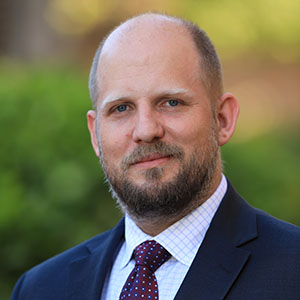
[00:41.04] My guest is Joe Geng, Vice President of Superior Glove and author of Rethinking Hand Safety. Joe grew up in the glove business and has spent his career helping companies better understand the real causes of hand injuries, from PPE myths and worker behavior to training, culture, and accountability.
[00:57.08] In this conversation, we'll explore why hand injuries remain so persistent in construction and what contractors, labor leaders, and supervisors can do differently to prevent them. Joe, welcome to Talk the Tauc.
[01:08.40] Joe: Thank you so much.
[01:09.40] Kirk: Before kicking off to our questions and getting into the meat of things, I always like to keep things fun and personal. I got to ask, what is the last song that you got stuck in your head? What was the last song you found yourself humming without your consent?
[01:22.24] Joe: Oh my gosh, my kids listen to music all the time. It's kind of like that's the default. They're mostly listening to hockey pump up songs. Anything that's hockey pump up, I can't think of a particular song, but anything like that's the music that I'm listening to in the car all the time.
[01:40.40] Kirk: Our CEO, Daniel Hogan, he's a 10-year hockey coach and he talks about how he gets Miley Cyrus' came in like a wrecking ball stuck in his head a lot because just as he sees the kids like smashing into each other and smashing, he's like, it's just the song that's permanently in his head because of kid hockey.
[01:58.76] Well, awesome. I was reading your book, Rethinking Hand Safety, and we were talking to some people in the construction industry. And I thought, this would be an awesome opportunity to have you come in and talk to us a little bit about that, you know, hand safety and how it's kind of overlooked sometimes.
[02:14.48] Joe: Something that's just kind of shocking for us is that hand safety is often at the bottom of the list for construction companies. When we talk to construction companies, it's like hand injuries are always their top injury or number two injury. It's like that never goes below that. It's a very common injury, but because people typically don't die from hand injuries, it's often an afterthought for construction companies.
[02:37.88] One of my pet peeves is like going onto a construction site and you see those signs where it's like these things are mandatory and it's not too often. Sometimes they see it now, but the majority of the time gloves are not one of those things as a mandatory item. And that's sort of like, that's your number one injury, but you're not putting on your list of mandatory things to be wearing.
[02:58.28] Kirk: It's true. I was just thinking about that. You almost always see your helmet, your eye protection and your vest. Those are the three you see on every one of those signs, but not gloves.
[03:07.80] Joe: Yeah, it's true.
[03:10.00] Kirk: Are gloves seen as less mandatory because they limit your mobility of your hand? I mean, is that kind of your take?
[03:14.84] Joe: I think that's the thought is like, okay, you have to wear gloves for certain tasks and other tasks you don't, or that's the thinking I think, that it's not considered mandatory. We are kind of jumping ahead, but I think the mindset should shift to gloves are getting to be so comfortable that they should just be a mandatory item that you're wearing all the time, not the thing that you put on occasionally.
[03:38.88] Kirk: Let's jump all the way back to kind of the man, the myth, the legend way back to you grew up inside the glove business. Your father worked in gloves, is that correct?
[03:48.80] Joe: My father bought superior glove in 1961. I grew up kind of working in the business to some degree as elite legal child labor, but I was always around it, whether you want it to be or not. Anyway, so yeah, he kind of grew up smelling like leather.
[04:05.96] Kirk: At what point did you realize the industry had this kind of hand safety problem and not just a hand protection problem? What was that moment that kind of shifted?
[04:13.12] Joe: Honestly, I don't think it was really a moment, it was sort of a gradual shift that I think we continue to be like today is like we're really product centric.I think a lot of different companies are like this where we're focused on the minutia of making a great glove and we're obsessed about the product and we're not really thinking about we weren't really thinking about the customer's problems so much as like, how do we make this glove a little bit better?
[04:34.76] We love gloves. We want to, we're kind of geeking out about the details of gloves. I just started working in the business full time in my 20s and I was reading a lot of marketing books and things like that and it came across that concept of customers, if they're buying a drill, they're not buying a drill, they're buying a hole, right?
[04:54.12] It's that you're like you're buying to try to fix a problem and then so just that idea that if you weren't actually buying gloves, they're buying lower hand injury rates is what they're aspiring for and then sort of gradually that opened my mind and we started thinking along the lines of like, okay, we're going to these companies and they're trying to solve this problem and some of them are doing it quite well and others are doing maybe at that.
[05:19.84] Then what is really that difference because it wasn't always like the glove wasn't always the determining factor, it was sometimes the culture and other things we so we just started to explore that a little bit more like why does like company A have almost no hand injuries and company B have a ton of hand injuries and like what's that? What was sort of that difference and we started to dig deeper into that.
[05:43.56] We dug deeper and deeper and talked to more customers and then we have kind of oddly found that there's like a lot we looked into white papers and there was like a lot of white papers along this topic. I wouldn't think that too many people had written white papers about hand injuries, but there was a lot and there was just like so much material. We finally decide, okay, like there's a lie here. Let's put this into a book and we thought we could put it into a book and make something that's kind of useful to customers sort of answer that question.
[06:09.76] Kirk: If you could, I mean, obviously you found a lot of research and you wrote a whole book about it, but if you could kind of summarize what did you find like what was making hand company A have very few hand injuries and company B have a lot like was there an overall defining factor? Was it gloves?
[06:2.838] Joe: If I could put it in just one sentence, I think it was like really getting employee input into solving that problem is like, okay, this is we're having a lot of hand injuries. What do you guys think? Then just getting people to buy into it from the beginning. I think that if like your boil the whole book down to like one sentence and like oversimplify it maybe a little bit.
[06:44.44] I think that was kind of like the difference between the company that had low hand injuries is they're getting people to buy and they're asking them how to solve this problem. Everyone from the ground floor is bought into it. And company B is just saying just wear these gloves and don't steal them. And that would be kind of the difference.
[07:02.80] Kirk: Now, like in the world of glovewares, there's obviously lots of different purposes and I mean, and utility to gloves, but construction workers use their hands a little differently than a lot of other people in their the run of their day. They have different tasks, different culture, different relationships to PE PPE. So when you walk onto an industrial construction site versus manufacturing floor or other places, what's distinct about how hand safety is utilized in construction?
[07:26.40] Joe: Yeah, construction for several reasons is much more challenging than a manufacturing environment. Manufacturing, like you're in a box, it's controlled, there's no weather to be worried about. You have this very controlled environment. And construction obviously is not like that. Like one is the weather. Two, there's a lot more, a person is switching tasks much more often.
[07:51.64] In manufacturing, you're often doing one thing all day long. In construction, five minutes you're doing one thing, five minutes later you're welding, the next minute you're grinding, the next minute you're hammering. There's much more flux to your day and you're switching tasks, which means it's harder to have that one glove that is ideally suitable or you have to be more flexible in that glove that you're picking to be able to do multiple tasks.
[08:16.40] Even the construction site you show up one day and the next day the hazards are different. If you're digging a trench, that trench might not be as safe as it was the day before that sort of thing. There’s a lot more flux. Then the other part that also makes it harder is just that subcontractors on site. You have multiple people working together that are from different companies and there's different cultures.
[08:39.00] Maybe that general contractor doesn't want to pay for the subcontractors gloves. That kind of thing that adds another dynamic that makes it even more complicated. The safety manager at the construction site I think has a much harder job than the safety manager in a controlled manufacturing system.
[08:54.56] Kirk: Absolutely. And like you said, you have it, not only do you have different cultures, you have different positions, different trades, different crafts, different jobs. And you also have everything from the apprentice to the journeyman, which brings me to kind of that worker psychology angle. And you get into this in your book about what makes people make those decisions.
[09:10.72] Whether it's the day or on a construction site, you've got journeymen sometimes who have been on the task for 20 years without incident. How do you reach someone whose own track record feels like they're proof? Like I don't need gloves. I've been doing this for a long time. I am the proof I don't need gloves.
[09:26.40] Joe: This has just been my experience, but I think over the last few years, we're finding that sort of attitude less and less. That we came across much more like 20 years ago of sort of the attitude that gloves are for sissies and you want to, that if you need to toughen up your hands, that kind of thing. I remember talking to a safety manager at a oil and gas site and they said that they would hire specifically somebody that had lost a digit because it showed that they had had experience.
[09:56.54] They wouldn't hire the person that had lost two digits because it meant that they were a slow learner that sort of attitude that an injury is a bit of a badge of honor and experience. But we've definitely seen that shift for the better. We don't really run into that too much of that person that says, I don't need gloves at all. I would say that that's less of a problem.
[10:18.92] In the cases where you still have a bit of reluctance here and there around PP, I think it's really, it's kind of talking to that person, that when we've talked to safety managers, we sort of observed that the best safety managers are very emotionally intelligent. If you have that person that's sort of a naysayer, we've seen those really good safety managers kind of like asking them their opinion, getting them on site.
[10:42.48] Hey, what do you think about what we should do about this? And sort of getting them involved and bringing them along for the journey. Then the best safety managers are very good at kind of swaying that person from a naysayer to an advocate. I think it's kind of quite remarkable. I'm not very good at doing that and that, but I've seen other people and safety managers do that. And it's really pretty impressive, human psychology, really.
[11:03.12] Kirk: Actually, I want to kind of dig in a little, a little bit. Where does the accountability for gloves, glove wearing or the appropriate hand safety live? Is it the foreman? Is it the superintendent? Is it the safety manager? Is it the individual? Construction is often very top down, you know, this is by order. But where does the buy-in to glove safety really live in your experience?
[11:24.08] Joe: I mean, I think the buck kind of stops with the safety manager. Like, it's the safety manager who's on the line when the compliance is low and that's sort of their role. But again, I think what the good safety manager is good at doing is driving that down, getting people to buy in, asking their opinions. We saw one site where the safety manager ran a campaign and what he did was he just said, "Everybody here, we're running a campaign for three months to reduce hand injury rates. Our hand injuries are through the roof. We want you guys to go home safe."
[11:53.60] What they did there was essentially said, "Everybody on this site is now the safety manager. If you see somebody not wearing gloves, you can go up to that person and you kind of issue a fine essentially. That person had to wear pink gloves for the rest of the day. And then for every pink glove that was worn for the day, the company donated $5 to breast cancer research. I think the employee also got like one of them.
[12:20.84] Both of them got a coffee gift card or something like that just to kind of incent them to do that. In their case, it worked really well because I think they had a really good culture to start. You kind of knew that person's not being a jerk by giving you the pink gloves. They're doing it because they want me to go home safe and they're reminding me out of concern for me.
[12:39.44] The company had a lot of fun with it. And their hand injury rates dropped dramatically when they ran the campaign. Then afterwards, they also saw dramatically lower hand injury rates. I guess the point of that story is that the best safety managers, they're not the ones saying, "You need to wear gloves. You need to wear gloves. You need to wear gloves." They're the ones that kind of driving that behavior so that as much as possible, other people are reminding each other and that there's sort of this peer pressure between them.
[13:02.80] Kirk: I like that. Not to get gross or ask for a bloody gory story, but that's a really good example of a fun, positive way of changing culture. What was the incident that stays with you and all your time visiting these sites and consulting with companies? Is there a hand injury that you've witnessed, been aware of, or been present for that kind of changed the way you thought about this, a particular incident?
[13:28.74] Joe: There's one story that really stuck with me as one of our sales people. He went on site and he was kind of recommending gloves and sort of doing a glove audit. He noticed there's one guy that was definitely like an Eeyore sort of naysayer. He's like, "These are not going to work. These are terrible." This guy was doing a lot of grinding and working with vibration tools.
[13:49.92] And he just went to him. He's like, "Just do me a favor. Try these gloves out. Let me know what you think." And he said he went back a couple of weeks later. And this old guy, the naysayer, was basically in tears. He said, "I've been doing this grinding job." He had white hand syndrome. His hands were shaky.
[14:09.28] And he said, "I could not hold my grandchildren. I had a newborn grandchild and I wasn't able to hold them before and now I am." This is such an emotional story. You couldn't hold your grandchildren before and now you can. And just the positive impact. Because oftentimes you think it's just a glove, you're preventing a blister or something little.
[14:31.48] But oftentimes it's like those hand injuries, they can be so debilitating. If you have to ask a person to be able to button up your shirt or do those tasks, it's such a debilitating thing and change the quality of your life. To be able to hold your grandchild, it just makes your life so much richer. Sometimes hand injuries seem like a small thing, but they really can be something that impacts your entire life and your outlook of yourself.
[14:55.12] Kirk: Absolutely. I mean, I don't think anybody doesn't realize it. I think everyone kind of gets this, but you don't realize. Your hands are how you interact with the world. A hand injury, subtle or otherwise, vibration, white hand syndrome, different things. It changes how you button shirts, count change, drive, everything.
[15:17.16] Want to get your company message in front of the top leaders in union construction? Place an ad on Talk The Tauc. Our listeners are owners, contractors, and labor leaders who shape the future of our industry. It's a direct way to reach a powerful, engaged audience and show your support for union construction. Learn more about advertising opportunities at talk.org.
[15:34.00] Kirk: So the subtitle of your book is "Rethinking Hand Safety - Myths, Truths, and Proven Practices." I want to talk about that word myths. What are some stubborn myths that you've come across that people still seem to believe about wearing gloves or hand safety?
[15:49.60] Joe: I think probably the most common one we encounter is that you need kind of thick gloves to properly protect. And that was probably true 15, 20 years ago, and now material science has improved so much that you can get very thin gloves and still have even better protection that you had before.
[16:08.40] We often kind of see that when we're doing trials and people are saying like, "There's no way this is going to protect me. It's too thin. It's too thin." And then sort of the proof is in the pudding. Once I use it for a bit, then it's like, "Okay, I actually feel comfortable with this." At first, it just feels like this is not enough. Then after they realize how strong the material is that it's in gloves nowadays, that mindset changes.
[16:31.08] The other thing too is that we run into this firm procurement is that cheap gloves will save money. When you do the math, there's no way that that's the case. It's kind of like thinking, "I'm not going to put oil in my car because that'll cost too much." The downsides of not being proactive are so dramatic.
[16:52.24] The protective cost is so low, relatively speaking, that there's no way that that math makes sense. Just an example is like, it's not uncommon for a construction site that have 30, 40, 50 hand injuries in a year. And everyone kind of puts a different cost on a hand injury. You see a wide range. But on the low end, a hand injury would cost $1,000 when you talk about medical costs, lost time for the employee.
[17:18.00] That would be the lowest possible estimate. When you think about that, it's like a construction site is spending $50,000, at least at minimum. It's probably several times that on hand injuries. And you're talking about a $8 glove versus a $4 glove or something like that. It just doesn't really. You're being penny-wise and pound foolish in that case.
[17:37.76] Kirk: So let's talk about training for that. Safety training and construction often looks like the toolbox talk or everyone gather around, we're going to have the safety moment. Based on what you found writing the book and in all of your visits to sites, what does training actually works look like? And why is most of what's happening on job sites today not that?
[17:55.44] Joe: I think honestly, if I was a safety manager and you had a training budget, I would spend 80% of the training budget on making safety easier. Instead of talking at people, I would do as much as I can to remove the barrier. So just to have more tool cribs on site where you can access products so you don't have to walk as far. Just have more reminders in place because I think there's only so much you can do to remind people.
[18:21.88] But if it's difficult, people aren't going to do it. The one analogy that I think of when you ask that question is my eldest son, he's just skinny and he doesn't eat enough, in my opinion. And I tried talking to him like you need to eat more, talk to him about the value of nutrition. And the more I did that, I saw he would just put his back up and be like, "I'm not eating dinner," or "I'm not eating that snack," kind of thing.
[18:45.24] And I was like, "I got to stop doing that." I would just shut up. And what I did instead, what we would do is put out his favorite snack when he comes over from school. So there's a bowl of cashews just on the counter. And I'm like, "Okay, I see him eating the cashews." And that's much more effective. Just remove those barriers and make safety easy. The downside of that is I eat way too many cashews now.
[19:07.52] That's a side note. But I think that same applies to construction site. If you can make those things much easier. Then kind of back to the training question, I think the best adult or training for adults that we observed is it's not like you need to do this, you need to do that. It's more like a discussion of what do you guys think about what's working here? What's not working? What are the barriers? And then having sort of that back and forth
[19:30.84] It's much more a conversation than do this, do that. Another best practice is if you have a large population where English is the second language. If you have a large Latino workforce or other workforce, you need to really double down on this. Because one, not having English as your first language creates a huge problem. And two, it's just that cultural differences are huge there.
[19:56.52] As Americans and Canadians, we kind of assume that if there's a problem, you're going to speak up. And with other cultures, it's just really not the case. It's like you're taught to don't question your elders, keep quiet and do your work. And along these, the one safety manager we interviewed, he told a story where there's one Latino worker on site.
[20:14.96] He was like, he was a great guy, but one day he was just working really slow. The guys kind of give him a hard time. I don't know what the guy's name was like, what's wrong? How come you're dragging so much? And then later he found out the guy had stepped on a nail and told nobody all day. He was working with a nail through his foot, right?
[20:32.00] That's like, you don't want to get fired. You didn't tell anybody, right? There's just, if you're doing training, you really need to make the extra effort for English as a second language people to get them to speak up and to get involved. Then other kind of interesting things we've seen with training is, and we've done this a fair bit, is where you get activities.
[20:53.60] We mentioned those hand injury things. Sometimes we do this thing where you'll have a quiz about safety. For every question you get wrong, you have to tape up a finger. Then some more questions you get wrong and more fingers are taped up. Then at the end, there's some tasks that you have to do that requires a fair bit of dexterity.
[21:12.16] And it just really drives home the point of like, this is what life is like when you get a serious hand injury that you're going to have trouble tying your shoes, taking care of yourself, that kind of thing. Those kind of activities is just much more, one, it drives the point home and two, it's more engaging than just sitting there and listening to somebody talk as well.
[21:31.32] And then the other thing that we've seen as effective is that if you have somebody that that's gone through an experience, either that's had a hand injury, or had a near miss or something like that, that they would talk because it's much better if a worker hears this from one of their peers than say from a safety manager or somebody telling them, you gotta wear your gloves or you got to do this, you got to do that. Those are the best practices that we have seen in terms of training.
[21:55.60] Kirk: It was funny, you were talking about how there are a lot of cultures that as Americans and Canadians, if things go wrong, we kind of say things, but a lot of cultures aren't like that. I won't get into where in the world or the country for just political reasons, but I have a friend that was moved to another country to be on the board. And he was told it was extremely common practice in this country to hire a loud outspoken American. That was the name of the position.
[22:18.00] He had a different title, but the kind of wink, wink, nudge, nudge position was the loud outspoken American because in that culture, if the CEO said something, that was a terrible idea and everyone in the room knew it was a terrible idea. The culture was, that's the boss, that's what we're going to do. They would literally import North Americans to come in and be like, excuse me, that doesn't make any sense because their culture precluded that being an option and it wouldn't offend them if an American did it.
[22:44.44] But in their own hierarchy, that was a super unacceptable breach of protocol. And I was like having, being that aware that this isn't something we can culturally do, but we can import loud outspoken Americans. That's kind of funny.
[22:59.20] Joe: That's true. I remember I read this story. I'm not sure what book it was in, but it talked about an air Korea crash. They had the black box, so they heard the recording and the co-pilot was sort of subtly telling the pilot, this is not good. We're going to crash, but in a very, very subtle way, do you think we might want to look at, you know, like not heading for that mountain?
[23:21.52] And the pilot was like, no, just keep quiet. And then once or twice they brought a very unique possible suggestions. The story was really like the co-pilot chose death over insubordination, right? Like they literally was like, I'm not going to step out of line and I'm facing certain death here. It was just so ingrained in the culture that they couldn't even to save their lives. They couldn't speak up.
[24:46.28] Kirk: loud outspoken American. We need to remember that there are people like that. There are people that will walk all day with a nail through their foot. There are people that will work with their hand lacerated to not look weak or insubordinate. And so we have to do that for them. I really like that from training.
[24:03.28] You said a moment ago that making the safer choice, the easiest choice, is important rather than just adding more rules or just talking at people from a union contractor running industrial maintenance shutdowns and rotating crews, tight schedules. What does that actually look like? You talked about more cribs. Is there a simple thing? If contractors could do one thing tomorrow that just making the safer choice simpler, what would that be?
[24:26.84] Joe: I think that kind of the complex answer to that is I'd look at where the bottlenecks are. Like if you could go on site and see somebody not wearing gloves and just to ask them a question of like, okay, why didn't you go get gloves or why didn't you wear gloves? In that case, that would be the best answer. But just sort of looking at removing those bottlenecks, if I had to guess, I would pick distance.
[24:48.32] Distance is the most common thing that we've seen. And I've done that personally too, where it's like I'm working around the house and my gloves are in the basement or something. I'm like, I'm not going 100 feet to get my gloves and then get a hand injury 10 seconds later and realize that I'm an idiot.
[25:03.84] But I think the inconvenience of distance is often the biggest one. So adding more distribution points. If I had to pick one up, that's the one I would pick. The other things that I'd look at is making selection easier so that at the selection point, you'd say, you're doing this job with a chemical hazard. This is the glove you choose. You're doing this job for welding or something.
[25:27.68] This is the glove you choose. Just make a chart that is ABC easy to read or just even better, just images. This task, this is the glove that you use. That said, I'm kind of talking about two sides of my mouth. I wouldn't switch gloves too often. We've seen that as a common mistake where a glove manufacturer or someone will go in and say, "You're doing these 15 different tasks.
[25:47.84] You need to use 15 different gloves." And it's like that. Construction people are like, No one's going to carry a quiver of gloves. No one's doing that." You're not going to use a glove for sulfuric acid, like a hands-in sulfuric acid, and you use the same glove for welding. That's not going to happen, but you've got to try to pick 80% of the day I'm wearing this glove, the other 20% I might have to switch to this glove maybe or something like that.
[26:11.76] I would also put reminder signs at the points where you think people are removing gloves. We've seen construction sites do this where you're coming out of the bathroom. There's a sign like, "Put your gloves back on," or you're in an area where you might have lunch. There's a reminder sign like, "You're going back to work. Put the gloves back on," kind of thing.
[26:29.52] I'd look at those points like, "Okay, where do people take their gloves off?" Just a little reminder, "Golts go back on here," kind of thing. The other thing too is what I mentioned at the beginning is the sign when you get on the site, I would definitely add gloves as a mandatory, "You should be wearing gloves."
[26:46.80] Even better best practice is if you have an image of a real-life person that is a little bit more powerful than a sign or caricature. If you say, "This is the PPE you should be wearing on site. This is a real person," and that sort of sends the message of like, "If you want to belong here, this is how we act. This is what you should be wearing." Those are the things I think that would just make PPE compliance a little bit easier.
[27:14.16] Kirk: This is my last question. I think you've answered in a few different ways throughout just our conversation, but I wanted to kind of ask it. It's the forward-looking challenge, the next year, the next three years, the next five years. Contractors, especially our listeners and members, we work in refineries and power plants, chemical factories, and just in almost every austere environment.
[27:33.44] If you could change one thing about how the industry approaches hand safety right now as we try to make hands a little bit more central to the safety conversation before that incident happens, what's the one thing, the most important thing they can work on?
[27:48.48] Joe: Yeah, I think it's not over complicated. It's not rocket science. This is like getting people to wear gloves. I'm not going to stick to your one thing. I'm going to make it a little bit more complicated. But the first thing I would do is look, I would start out your injury data. That's the best place. You can see like, "Okay, where are injuries happening?"
[28:05.00]That said, the majority of construction companies we work with, it's like even very large companies, they're having good injury data around hands is uncommon. Most times we look at the injury data and it's quite bad. It'll say like, "Bob got a hand injury." And it's like, "Okay, well, what happened?" And I'm like, "Oh, you don't really know. Was he wearing gloves?" I'm not sure.
[28:30.64] For most companies, the data is pretty bad and almost useless. So I would start by fixing that data so that you would know. You want to answer the question of like, "Were they wearing gloves? What was the root cause?" At least a bit of information so that if you're trying to say, "How do I fix this?" You would know. You would be able to slice and dice an Excel spreadsheet and be able to look for what happened. Was PPE worn? That sort of thing. So that's where I would start.
[28:57.52] If you have bad data, I would fix that. Then I would start with just the easy thing is by far the most common injury on construction sites with regards to hands or lacerations. It cuts like a box cutter here, that kind of thing. I would get people in comfortable hand protection that's the least A4 or cut resistance A4 or higher. The levels go from 1 to 9.
[29:24.72] I think A4 is a good starting point for cut resistance. You don't need to be necessarily in A9 by any means. But I'd start in A4 cut protection and just get the most comfortable glove you can find that people will wear. A good miss test for that is, "Can you work your iPhone with a glove? Can you tie your boots with a glove?" That sort of thing. When we look at injury data, a lot of hand injuries happen.
[29:50.56] Almost line share is when people take their gloves off because they had to handle fine screws. Then they don't put them back on and then the injury happens. The big task is get people in some sort of cut resistant glove that they are actually going to wear. If you've done that, you're going to see a pretty big drop in your hand injury.
[30:09.36] If you can do that, that's a huge first step. Then I guess the third thing I would do is probably look at impact protection. Impact is like a close second in terms of injury. I'd look at a glove that quite likely has impact protection. Then I think if you've done those things, then like we talked about the nudges making safety easy, removing the bottlenecks for people to get PPE and sort of make it automatic.
[30:40.88] And then I think after that, then you're looking back at your injury data and looking at the long tail of what's the bottom 10, 20% of hand injuries that are happening and how do you kind of tweak it and eliminate it from there. But if you do like those first three things, you're probably 80% of the way there and you should see significant drop in hand injuries.
[31:00.24] Kirk: Joe, thank you for joining us and sharing your perspective. And thanks to all of you for listening to Talk The Tauc. If you found this conversation valuable, be sure to subscribe, share the episode with a colleague, and visit tauc.org for more conversations on the issues shaping union construction and maintenance. We'll see you the next time.