Episode Transcript
[00:00.00] Welcome to Talk the Tauc from the Association of Union Constructors. In this podcast, we explore the latest labor trends, industry insights, and important issues in the world of construction. Join us for conversations with industry leaders, subject matter experts, and innovative visionaries as we discuss how we are building the world of tomorrow. Talk the Tauc presented by the Association of Union Constructors.
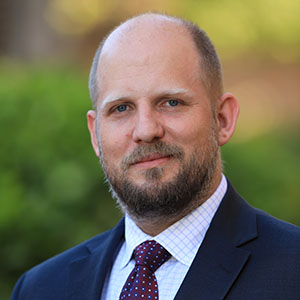
[00:24.72] Kirk: Today, we're joined by Becky Chahal, an operations leader with DPR Construction in the San Francisco Bay Area that operates not just nationally, but globally. DPR is known for managing highly complex projects across multiple markets, and Becky brings first-hand experience navigating schedule pressures, labor coordination, and owner expectations in some of the most demanding construction environments in the country.
[00:47.90] We ask Becky to join us to talk about project delivery, specifically where planning assumptions break down, how teams adapt in the field, and what contractors wish owners better understood about execution realities. Becky, thank you so much for joining us today.
[00:59.96] Becky: Thanks for having me.
[01:00.96] Kirk: So, if you've listened to the show before, as you said you have, you know my first question is always the song that has been last stuck in your head, and I'm curious.
[01:10.24] Becky: I had to think about this one a little bit, but I have two elementary-age kids at home and my husband is trying to get them familiar with what he thinks is the best music genre, which is '90s rock, and so we dabble in Pearl Jam and we dabble in Metallica and other ones, but recently he introduced them to the song "Spoonman" by Soundgarden, and they've latched onto that one, and that has been playing nonstop in my house, in the car on the way to school, all the time.
[01:39.68] Kirk:That is solid parenting. My daughter, she's now in seventh grade, but I think she was in fifth grade at the time. She was in ukulele club because that's a thing now, and I have ukuleles in my house that we play around in. My daughter picked it up and started playing "Hurt" by Johnny Cash, and then the teacher was like, "What are you playing?" She's like, "Oh, it's "Hurt" by Johnny Cash," and he's like, "Your parents are awesome and weird." My daughter picked up a ukulele and could play "Hurt" by Johnny Cash.
[02:09.64] Becky: That's amazing.
[02:10.64] Kirk: It's kind of like a proud parenting moment, slash probably an odd choice on my part.
[02:15.92] Becky: It's amazing. I coach softball as well, and we do walk-up songs, and you get an instant reflection of parents any time a kid walks up to bat, so you know exactly what the genres are that play in their house. It's pretty funny.
[02:30.68] Kirk: I guess I never thought about that. It's more of a reflection of the walk-up music, it's more a reflection of the parent than the kid. That's a good point. Let's just kick off and go. Tell me a little bit about DPR and your role there and what you guys do.
[02:45.48] Becky: I am currently on the leadership team in the Northwest, so DPR is a company that works across the U.S. and Europe, and we're a very technical builder, so we've got core markets in healthcare, advanced technology, life science, do a lot of technical work, ground-up construction. I really started in construction all the way back in 2003 as an intern with DPR when I was getting a degree in construction management and just really appreciated the technical
work that we do.
[03:18.00] The challenging work, and kind of worked my way as an engineer, as a project manager, and now spend more time with our project teams across the Northwest really supporting them, building our teams on our company strategies, and really helping them through our complex, fast projects in a consistent way.
[03:37.60] Kirk: Just to give a baseline for people listening, we have listeners and members that really run the gamut for some pretty straightforward things all the way up to highly technical. Give me an example of what you mean by really technical builder. What are some of the projects that you are building that are really technical?
[03:53.48] Becky: Again, ranging our core markets, we do anything from research and development facilities for life science companies. We do a lot of data center work. We build medical office buildings, hospital towers. We do a lot of work for universities, higher education, but again, in more of that research and development type space, and then we do a lot of corporate office type of stuff as well.
[04:14.20] Kirk: Awesome. Our market is almost entirely medium to heavy industrial, so lots of data centers, lots of, I wouldn't say necessarily research facilities, but everything from petrochemical processing plants and a lot of that stuff. That technical expertise is going to speak very well to a lot of our people.
[04:33.90] One of the questions I have for you guys is, as you guys are moving these projects from the kind of pre-construction and building these out and moving to your execution, where are you seeing things break down most? What are the biggest hurdles you're having to overcome moving to production?
[04:48.72] Becky: When you really think about our projects today, they really are more complex than we've ever seen them. A lot of technology is integrated into them, and though the markets have evolved, oftentimes we see a lot of our clients, a lot of our projects trying to utilize pretty traditional construction delivery methods. They're just not always super well suited.
[05:07.84] A lot of what we really focus on is that left-of-the-line integration and alignment with our client, our design team, and our key trade partners, going all the way to what are our project goals, how do we understand what our key contributors are, how do we get alignment very, very early on on what is our budget, what is our scope, what is our schedule, and really getting down to how do we make decisions as a team, how do we get connected as a team so that we can get ahead of those early constraints.
[05:36.44] What we often see is some of those misalignments don't always find their way to the surface until later on in construction. The more and more we can get out ahead of those things, the better off we're going to be.
[05:47.56] Kirk: You said you came in 2003, just a little bit of background and just kind of have some fun with it. 2003 to 2026, I think everyone in our general point in our career, the world and the tools have changed so much. I'm not saying that I haven't been using Excel for 25 years, but the way that I use Excel has changed dramatically. The tools within Excel have changed dramatically. What would you say, have you noticed just from whether it is, this isn't a podcast about AI, but whether it is AI or project management tools or how tools changed for you in this?
[06:26.12] Becky: One thing that comes to mind initially is when you and I started, when I started, was when you thought about virtual design construction, you really thought about them, you thought about clash detection and it was, "Hey, we're going to take a 2D document and we're going to turn it into 3D and we're going to clash it out.
[06:42.00] We're going to try to do some of those things." Some of that process has evolved over time, but what we've recognized is that's really just a component of the overall concept of virtual design and construction. How do we take even that and continue to challenge it? What does it mean to go into a 4D space? How do we not just look at it in space, but think about how do we sequence the work in a different way?
[07:04.82] We do a lot with technology when it comes to scanning and getting early information to help inform design. We also are seeing more and more, there's ways we can use technology to really help help our craft, whether it's with quality, alignment, again, taking information directly from a model and what does that mean when we go to prefabricate it? There's a lot of different ways in which we see technology really influence the way we do work.
[07:32.56] Then, as you mentioned, with AI and everything else coming on board, it's really looking at we want our builders to be able to be building the work. There's a lot of paperwork, there's a lot of other things that come into what we do when we're managing time and sometimes we can get bogged down with that. We're really looking at what are the tools, what is the technology from an administration side as well that can just help us put our focus where it needs to be, which is solving the technical problems, getting out in front of procurement and all those things, and let technology do some of the other heavy lifting.
[08:07.60] Kirk: Now, I know you guys are based in the San Francisco Bay Area. Thank you for being here. The time difference is always interesting with these podcasts for people that are on the other coast and from us, so thank you for your flexibility there. You're a nationwide company, so are you guys mostly in Northern California or are you all over the place?
[08:26.96] Becky: We're really all over the place. For a long time, we kind of made a smile, I would say, across the US. We liked beaches and warm weather. The advanced tech market has really taken us to a lot of different places throughout the US. We still continue to do a lot of work, again, on both coasts throughout Texas.
[08:43.32] We're continuing to, again, evaluate. We're a very client-driven company as well, and so really looking at our key clients that we can continue to do work for and build those relationships with. An example recently did some data center work for Vantage Data Centers. That relationship started in Northern California, and it's really blossomed all the way through the southwest to the east coast and even out to Switzerland.
[09:12.48] Part of that, again, is that the mindset that we have and when we come in with a client is really understanding their business, understanding right now speed to market is huge and the AT world. It is in every business, right? We're really understanding what those drivers are for them, working through how we help them meet their goals.We've been able to, again, build those relationships and continue a partnership throughout the country with them.
[09:35.88] Kirk: You're working in all these markets. You were saying both coasts across Texas. In these multi-craft, you're not just working with lots of multidisciplinary, multi-craft projects. Talk to me a little bit about multiple trades, working in tight sequencing. How is labor availability? There's been a lot of debate. Is there labor shortage versus not a labor shortage? How has that been?
[09:58.64] Becky: Maybe kind of address that in a couple of ways. One is, I think it's well known that there are labor challenges across the industry. One, DBR is pretty fortunate that we've got over 5,000 skilled trades crafts within our company that redeploy across a number of projects across the country. But we also, there's a couple of different ways that I would say we tackle it.
[10:19.76] One is, retention is pretty key for us. If we can maintain a steady workforce just within even DPR, that's going to continue to help us. We've looked at really engaging what that means from a craft benefits perspective. We've also started an initiative in 2024 to really look at, we call it our Building Belonging Initiative, where we really look at what are our job site conditions for our crafts.
[10:45.28] For a long time, there's been a bit of a discrepancy between how an admin shows up, what restaurants they are using versus how a craft worker shows up and the type of restaurants that they're using on site. Why do we have those discrepancies? I bring that up because when we really start to think about those types of things, it can influence the number of people that want to show up on your job site every day.
[11:06.00] We're really pushing on some of that stuff. I would also say, though, one of the key things that we look at early, early on in planning the job is what does that bell curve look like when it comes to labor availability and labor needs on a project? How do we avoid some of those peaks and valleys? When I mentioned, "Hey, how do we get out in front? How do we collaborate with our clients early on?" Some of what we've looked at recently, we had a really good success story on a medical office building in California where we took some of the most congested areas where we've got a lot of multi-trade utility spaces.
[11:41.12] We said, "How can we modularize this a bit?" We basically worked all the way back in design and coordination to develop multi-trade racks that we could not only coordinate between trades, but take those units, bring them down to ground level, have our folks build these modular trade racks on the floor, and then when the space was ready for them, we could lift them up. What does that do?
[12:09.52] One is, it helps with quality, it helps with productivity, it helps with safety. But it also takes that man curve that we're talking about, that spike in electricians or sheet metal workers or pipe fitters, and it starts to level it out a little bit because some of that labor-intensive work that they're doing in our MEP overhead, we can take that. We can shift it a little bit earlier. They can do that work. The work was happening onsite.
[12:33.60] We set up a modular prefab area onsite, and they could do that work ahead of when they would normally do it in a typical construction setting. It really helped us save time on the back end, but also level out our man curve overall, if that makes sense.
[12:50.20] Kirk: No, absolutely. It speaks to everything from productivity to staffing. There's been a lot of interesting movement I've been reading about with these modular constructions of building elements and having them delivered or even building them modularly onsite. That has been a big change in how things are made, but as you talked about the beginning with the BIM models, starting with 2D and making it 3D and then even 4D with the sequencing, If we can upset and disrupt that sequencing model, it allows us to be a lot more productive a lot earlier. It also helps with things like just-in-time delivery, where we can deliver things at a better sequence.
[13:26.56] Becky: Absolutely, yeah. A lot of that work, again, happens very, very early on. It takes that alignment when you talk about some of the breakdowns that can happen, but it's like how do you get those conversations to happen early enough in the project where we can make some meaningful change?
[13:41.56] Kirk: Absolutely. What was the company? I'm sorry, you said the data center for who?
[13:45.32] Becky: Yeah, Vantage data centers.
[13:47.28] Kirk: Oh, awesome. Can you tell me any more about those projects? We have a lot of people working on data centers or trying to work with data centers or standing up data centers. How did that go?
[13:55.88] Becky: Yeah, we've had quite a few successful projects for them and some that are ongoing as well. Again, they're one of a handful of AT clients that we work for. Like I've said, the AT market is a pretty exciting market right now. It brings all the complexity that you were just talking about, a lot of number of trades coming together.
[14:14.52] Again, I think the reason those jobs have been successful, the number of jobs that have been successful with other AT clients as well, is really understanding that goal of speed
to market, understanding how to remove some of the constraints early on. We see a lot with our AT clients being able to select equipment early enough to be able to bring that information into design, to be able to procure the equipment in a way.
[14:42.28] There's a lot of standardization of design, I would say, when you're starting to see the hyperscaling as well. All of those types of conversations allow us to move pretty quickly. The more we can integrate with those folks, again, with design teams and understanding how to get material to site quickly and get it up quickly, is going to just continue to help us be successful with them.
[15:08.16] Want to get your company message in front of the top leaders in union construction? Place an ad on Talk the Tauc. Our listeners are owners, contractors, and labor leaders who shape the future of our industry. It's a direct way to reach a powerful, engaged audience and show your support for union construction. Learn more about advertising opportunities at tauc.org.
[15:25.88] Kirk: I know that DPR, I'm on your website and looking at a lot of your projects and a lot of them look really cool. You're not just nationwide, but you're worldwide. You have data centers in Germany and you have things everywhere. Do you personally work mostly with the stateside stuff or do you have any interactions with the global stuff?
[15:43.48] Becky: I do not personally have interaction with global. I stay in the Northwest, but I integrate with a number of folks, again, nationally, especially where we have clients. Again, as an example with Vantage, that would be one where if we have key, if we've completed a project, which we've done a number of them in California, and we're starting work in other parts of the world or other parts of the country, we definitely try to connect the dots to make sure that we're providing them a consistent resource. I don't have outside of that really a ton of visibility, but know a few folks that do.
[16:16.20] Kirk: The reason I asked, that was kind of a precursor to this can work just domestically as well. If you have found the same friction points in Northern California as you do in Corpus Christi, Texas or Frankfurt, Germany, if the pain points from coast to coast or even country to country are similar or different, if you have any experience there?
16:37.92] Becky: I think there's nuances in both directions. When you really get to know, one thing is construction is a team sport and as much as there are technical components to it, there are personal components to it. That's kind of the fun of it as well. There's different teams that are operating across the country for all of our clients, no different than how we operate. We also work in a world now where the supply chain is more global than ever.
[17:06.24] Really understanding the global supply chain. I remember, again, 20 years ago, I felt like I could just call up a trade partner and say, "Hey, when am I going to get this air handler?" I would get an answer typically. Now, even if a product is manufactured in the U.S., there are components that are typically coming from all over the world. Really being able to understand that.
[17:29.48] You could say that something that affects me in California, if it's the same line of equipment, it's going to affect someone in Texas or somewhere else. That's one aspect that I feel we see similar constraints and pinch points no matter where we are. Obviously, labor availability and other things, that's a little bit more regional dependent, I would say, but we've also, as DPR, seen more and more of a need to create a more robust mobility program so that we can deploy resources as needed to projects across the country. I think there's a lot of different ways in which we're trying to tackle a growing market.
[18:04.32] Kirk: It's amazing just how global a lot of this has become just over the last five, seven years. I'm not even sure the pandemic is included in that five to seven years, but lots of other things from tariffs to trade routes to geopolitics to gas prices have been everything from where is my computer that I ordered to where is the steel that I ordered, there's been massive implications in delivery times throughout.
[18:31.48] Then I wanted to ask about working with owner relationships and things you found of what is the basis for the lots of different partners from, like you said, research facilities t universities to data centers. Talk to me about maintaining and the importance of owner relationships and how that works for you guys.
[18:51.72] Becky: I mean, kind of hit on a little bit. We are a service provider, right? I mean, ultimately, we are providing products to a client. Again, like you said, no matter if it's an AT client or a life science client where it's like, "Hey, we have to be doing science in this building at a certain time," and that is what is driving their business forward, right? Really understanding that client relationship is so important to what we do and how do we drive that.
[19:22.24] What we've also found, though, is the more, again, transparent that we can be from the upfront on the job to really work through what that partnership is all the way upfront. Having, sometimes, the tough conversations as well in the beginning of a job of, "Hey, if we want to get to where you want to go, there's some tough decisions that we need to make," or, "There are some things we've got to work through," or, "Here's the constraints," right? But really working through those things with them so that we can create a predictable outcome at the end of the day is what we find is super valuable to maintain those relationships.
[19:55.44] Kirk: I actually really like that, again, it plays into it. An organization says, "Hey, we have to be doing science in this building on this day. We have a thing," or, "We have this deadline," but things happen. I'm in the Army Reserve and the Army military has this joke of, "No plan survives contact with the enemy." It just doesn't happen.
[20:14.60] Contact with the enemy destroys anything you thought you were doing today. The [inaudible:00:20:18] is no longer realistic. When something has happened, when supply chains make hiccups, what separates the plans and the teams that can adapt and make that work and the ones that don't? What are the two factors?
[20:32.08] Becky: It's a couple of things, and like you said, you can create the best plan on earth. There's a lot of things that we try to do when we know we've got those constraints ahead of time to work to make the right decisions to try to get to a point where we feel realistic. Sometimes we get a proposal schedule and it's like, "Can we sign up for this?" Right? And oftentimes what we try to do even from the upfront, and again, a success story on a project that I worked on a couple years ago was a very quick, around a 14-month schedule to do a ground-up, 100,000-square-foot life science space.
[21:07.08] It was like, "How are we going to get there?" Really looking at the constraints upfront, it was, "We got to get foundations in place. We got to get steel on site. We got to get dried in. If we can get dried in quickly, we'll help them get there." Really working through some kind of out-of-the-box thinking about how do we get to that point with them helped us get to success, right?
[21:26.88] Some of that was, again, back to the prefabrication solutions and other things. But like you said, there's also rocks in the road, right? You get to a point and something's just not working. And I think there's a lot of things, again, whether we're reacting from a really, truly understanding what their needs are and how we can work to get what their primary needs are. Okay, you've got, same example, you've got this 100,000-square-foot lab space. Do I need all of it tomorrow? Or do we need all of it? What do we do to phase it out?
[21:57.92] What do we do to shift our resources in order to meet their needs in the best way possible? I think we always try to take as much of a can-do proactive approach as we can with our clients. I've also, though, learned in ways you've got to be just upfront and honest. ] It's one of those moments of the earlier you rip the band-aid off and have the conversation, the better you can turn into proactive mode and come together as a holistic team to solve the problem versus kind of waiting and hoping that it figures itself out along the way.
[22:33.10] Kirk: We always want to try to leave people with not just lessons learned, but what do I do with this information? What is the key takeaway? And so it's based on your experience and the things you've done and the things you've learned. What's the one planning assumption contractors should revisit? Something that if you're doing, you should be doing differently, or if you're not doing, you should be doing.
[22:52.04] Becky: From my perspective and some of the lessons I've learned is a lot around transparency and a lot around this concept of go slow, go fast. A lot of times you get awarded a job and you just think, "We've got to put pen to paper as soon as we can." I think really allowing for the time to get the right stakeholders in the room, get aligned as a leadership group, really understand what that compass north is for the project.
[23:18.48] You think about the concept of like, "We can all roll faster when we're all rowing together." Making sure that we not only get everybody on the boat but start rowing together is really a key thing. Building that healthy team from the start with your client, with the design team, with our key trade partners, I think is really key to then weathering any storms that come down the path, especially when it comes to these complex projects where we have to move fast and we have to make decisions quickly.
[23:47.54] Kirk: My one follow-up to that, which you kind of queued up perfectly, is just there's a lot in there about communication, everything from transparency, to having the plan, to having the alignment. What have you learned specifically about communication, both internal and external, that can make the difference on projects for these complex jobs?
[24:04.60] Becky: It really comes down to enabling the ability to really work together as a team and going all the way back to our initial conversation when we think about the traditional kind of construction methodology, which is this triangle that you take place with an owner and a contractor and a design team. The more that you can break down those silos early on is really key to driving a complex job quickly. When you maintain that relationship and build up a level of trust with all of your key trade partners, key designers, it really just enables, again, that communication, those decisions to be made quickly when it's needed.
[24:46.56] Kirk: Just in the last 25 minutes, we've outlined so many different complexities going on right now from technological changes to the world is changing. By the time we're done building these buildings, often the technological needs for these buildings is already different. If there's one piece of advice for industry leaders managing these large, high-pressure projects right now in our current climate, economic, trade route, technological, what would that single piece of advice be?
[25:10.20] Becky: Embrace the change, get out in front of it, but when you lock in, you just got to go. I think there is oftentimes a feeling of need to try to keep up as much as you can. There's reality that there's time that sets in to just project build. We can sometimes be our own worst enemy when we try to catch up and keep up consistently. Really being able to lock in and build a program and stick to it and just really allow that to come to fruition is key and then move on from there.I think consistently trying to adjust midstream can actually, at times, do more harm than good.
[25:47.72] Kirk: Becky, thank you for your candor and your insight. It's always valuable to hear directly from leaders who are navigating these times in real time and it can be difficult with the changing streams and the changing environments. Thank you to everyone listening. We'll be back soon with another conversation focused on the real world and focusing union construction and project delivery. Thank you so much for your time today.
[26:06.96] Becky: Thank you, Kirk. It's been a pleasure.