Episode Transcript
Kirk: Welcome to Talk the TAUC, the podcast from The Association of Union Constructors. I'm your host, Kirk Westwood. On this show, we bring together voices from across labor, management, and the broader construction industry to talk about safety, innovation, and the future of union construction.
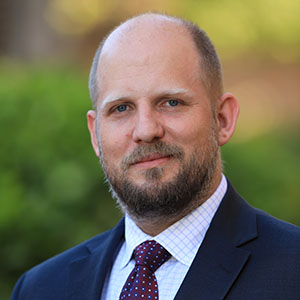
Today I'm joined by Justin Azbill from the Tribal Group. Justin has been a powerful advocate for advancing safety, training, and workforce development in our industry. His work emphasizes building strong job site cultures rooted in respect, inclusion, and accountability.
Justin, thank you so much for being here with us today. Before we kick off and get into the meat and potatoes today, I want to start off with the most important question that I like to start all my podcasts with, and that is what is the last song you got stuck in your head?
Justin: I have a 13-year-old daughter that likes K-Pop. That could be a touchy subject for me because sometimes some of the music she listens to, her favorite K-Pop man is Stray Kids, so it's the song Chk Chk Boom. She dances to it all the time. That's probably the best one that I get stuck with, but then also when I drive a lot, I like listening to the Sirius XM channel for Pink Floyd. They play a bunch of different songs, so I guess the best one is In the Air Tonight by Phil Collins. I was on it this morning, and I can't get the drum solo out of my head.
Kirk: That one's particularly infectious. That one is an earworm to end all earworms. I have a 13-year-old daughter myself who also likes K-Pop. How much K-pop Demon Hunter have you had to watch recently?
Justin: That's where I draw the line. I haven't had to do that. I know she does. This summer, I tell people I was somewhat tortured because I had to go to Stray Kids in Washington, DC, and they ended the concert early because it was so hot. My daughter manipulated my wife into booking a trip to London to see Stray Kids. I was like, okay, we'll go to one concert there, but we ended up seeing two concerts, one after each night. That's why I was like, okay, I'm done. Their music's not bad. It's just that I'm just old school, rock and roll kind of guy.
Kirk: I got you. Tell me a little bit about your background. I know a little bit about what you're doing now. Just walk me how you got here from start to finish.
Justin: I was raised in Kansas City, very financially challenged family, meaning we were very poor. My parents countered that with filling us kids with a lot of attitude, meaning you got to work with your hands. We don't raise weak men in this family kind of mindset. We were brought up, us boys, that we were going to work with our hands in the construction industry.
I wanted to be a firefighter though. However, when I went to the Marine, I joined the Marine Corps as a junior in high school in the delayed entry program. When I came back, I wanted to be a firefighter. It is not like you go get a firefighting job first day. My mother had planned like, hey, you need to stay real busy, because she didn't want me to get distracted. She didn't want me to start being taken down by stuff I dealt with. The transition from military to civilian life's heart, she knows she'd been through it with my father.
I got hired on by the local 10 Iron Workers in Kansas City. They took me on, even though it was the start. They knew that work was going to slow down. They wanted to give me an opportunity. It was short lived. It was only 9-10 months because I got laid off. Right about a month after that, I got hired into the fire service, which I was grateful for is my dream job. I hold $41,000 a year right. Not a lot of money.
On my off days, I started working as a safety guy, what they called a confined space rescue tech back in the day was a safety guy. I was doing shutdowns for a lot of the different companies outside of Kansas City. Owen Mills was transitioning plants to ethanol as well. I would work shutdowns. I got real lucky, and a general manager noticed that they didn't have incidents when I was around and offered me a job in safety.
Growing up very poor and was taught that you don't turn out opportunities, especially when you make a lot more money. They offered me almost three times the amount of money I was making at the time, and that was in the late 90s. That was a lot of money. I never asked what it would take. I said yes. I was an idiot back there, I was a knucklehead. It was all about the cash. However, that meant I was working a hundred hour work weeks. The company was Kiewit.
That company becomes addicting. They start pumping Kool-Aid in you real early. It is not just about the money, it's the culture, it's the people. You're building some of the most dynamic, amazing jobs. You're seeing milky pound crane picks right in front of you. You're flipping pieces of stagers with two cranes and hoping there's no failure. You're learning every day, and you're just surrounded by some of the best trade professionals. You're seeing working athletes. You're watching things happen in front of you that most people will never see in their life. That's how I got started.
The next thing you know, I got shipped to Massachusetts, supposed to be up here six months. At least that's what they told me. The next thing you know, Dominion Energy is loving me more than anybody else in a job, somewhat. Safety is really good, the trades are bought in. The six months turned into five years. I got married.
My wife worked a lot at the same time too, so it was a perfect match in heaven because we were both career orientated. Our little bundle of joy, Carly, came around. Quickly, I had to figure out. I was raised family first, so I had to figure out what to do because a hundred hour work weeks, they wanted to ship me to a Washington DC job that was a top secret job. I'd be there for 10 years, come home every three months. That just wasn't jiving with me.
I made a phone call, got a job within the day of figuring it out with Suffolk Construction. I made a name for myself there. Two years later, I got hired by a company called Cannistraro because they recruited me, a mechanical firm. I won a whole bunch of different awards working for that company because they didn't have a safety culture. That's where I actually got introduced to The Association of Union Constructors back in 2015.
The dad duty thing came up again because I was leaving work for at 2:45 AM and happened to go to bed at 7:30 PM to maintain that schedule. We're working in Boston. The drive to get there is nuts, then getting home to pick up your kid in time, and all that. Parent life was a big issue. Again, family first.
I went to work for another company called Callahan. They were mixed trades, meaning a mix of union, non-union, and a signatory, most of them up here in Boston. I got recruited by Milwaukee Tool. Five years later, I'm like, hey, mission's going to be different now, because I started seeing not only did I have a personal journey with suicide. I started seeing where our industry was going and I said, my mission needs to change. The numbers statistically are bad. We're losing around 20,000 people a year right now to between suicide and substance use disorder. We were focused most of my career path on that thousand number we were losing people to injury and illnesses, which they're all tragic and they're all preventable.
Our industry's very reactive to things that come up, and I just didn't like it. I transitioned last year, at the end of the year. August last year, I had a great conversation with my boss when I was at Milwaukee. Scott Teson. I said, hey, brother, I think at the end of this year I'm going to retire from safety. He goes, what do you mean? I'm like, I need to be focusing on the people side of business, of building people, helping them out.
A year and a half right before, I started school to get my PhD. I had been writing my dissertation paper. I needed to start ringing this bell because I could see it coming. We're losing 18% of our leadership next year to retirement. Ten thousand people are eligible every day for retirement as baby boomers. There are 400,000 open jobs in the construction industry right now too as well. All of that combined, I feel like we have a train wreck hitting with the numbers of loss of life to death by suicide and substance use disorder. All the leadership, we needed to do something different.
Where I am today, I started my organization called Mission Mindset US and then The Tribal Group, which is the safety side of the business. I'm thinking I would do a little bit of both. What I found is that Mission Mindset US is just explosive this year. My heart's filled right now. The side of the business where I've been able to educate people from a leadership standard on how to have even just a professional conversation, training people on the mindset risk in the industry, which is the joiners theory, and I've added two extra because of my journey, and just being proactive. We got to get ahead of this game.
In life, facing challenges early on, before we let them all compress and build on top of herself. Trade professionals, there's one thing about us in the industry. We're prideful, we have egos, and we've been brought up with generational mindsets that we've learned from people who came back from World War II and stuff that you're not supposed to talk about, personal stuff with people. We got to get away from that, be more vulnerable, and make sure that when we have something going on in our life, it's acceptable to talk to a human being about it. It doesn't mean you got to tell the whole world.
I've been sharing my story for the last three years. You were there the first time at the leadership in Savannah, Georgia. That's the first time I publicly shared my journey with suicide as a leader. I got burnt out. I started sharing it and being vulnerable. It's caught on with people. They're like, you know what, I resonate with what you're saying, I struggle with these too. People are reaching out now and saying, how are you coping with it?
I teach them about shadow work. That's what I did in recovery. Not everybody needs to see a clinical psychiatrist. Sometimes we just got to deal with some human challenges, talking to other people. That's what I've been doing since January 1st of this year. I'm already starting to get booked out midyear next year. That's crazy. I never thought I'd be this crazy.
Kirk: What tools do you have to change the culture of an organization, not just necessarily an individual mindset?
Justin: Great question. This is something that comes up often because a good culture is a magnet for top talent. I talk about that a lot. One of the things that I do that is part of the mission mindset is the human connection side of it. Teach people how valuable that is.
My paper was called The Human Side of Leadership. The data alone helps managers understand the financial aspects of the power of culture. If you have a bad culture, you're going to have safety instance. If you have a bad culture, you're going to do a lot of rework, which means at some point the name of the company is going to lose credibility.
Kirk: How have you seen cultures change in general? I know that safety culture specifically has changed leaps and bounds in the last 20 years, but throughout your life, obviously from the Marine Corps, which I'm in the army, the military has its one culture, but from the firefighters, to the Kiewit, through Milwaukee, how have you seen the cultures through construction in these various industries change over your career?
Justin: When I first started, there was not safety people on jobs at all, let alone if a company had a safety professional. We used to be called the safety cops back in the day. In the last five years, I've seen it transition to people being called professionals because we are professionals at what we do. I'll never forget, in high school, I was told I'd be a great construction worker like it was an insult. I'm like, okay. I didn't ever have that as my plan of being in the construction industry. I wanted to be a firefighter. However, I would take my journey over anybody's right now.
I've made really great money, I'm surrounded by amazing human beings, and I have a PhD. I'm writing a book and I'm helping people. I'm done okay. The construction industry's treated me good. I've seen other individuals come up. To answer your question, the culture changes. We've gone from being called ditch diggers to being called working professionals. I think that just has a lot to do with organizations that are taking data, taking people's feedback and listening, and marketing it in the proper way.
The Association of Union Constructors is a great example of that. When I first started, Dan wasn't the CEO, but he came up and he's seen what the industry needed. We've gone from generationally learned behaviors to the bringing people up as professionals. Culturally, I couldn't be more proud of our industry. We have some systematical issues we got to deal with, but from a culture side of it, I've seen a lot of organizations take take us ditch diggers and making it very personal about the human beings in it, so it's been great.
Kirk: You and I have talked about it, and I've heard other things you've said about the importance of respect and inclusion on the job site. Talk to me about how both that has changed, what that looks like in practice, and how we can do better at getting more respect and inclusion on the job site.
Justin: When I first started, a foreman was known. Even in my research, people just think they yell at you and stuff. It's because that's the only way to get things done kind of mindset. What I have seen a lot from an inclusion side of it is you have professionals in this industry that have built confidence through mindset of knowing that they're elite at what they do, they build buildings, bridges, train, whatever it might be. They're professionals and they're good at their work. They've taken that.
What I'm starting to see, which is amazing, is these journeymen, these foreman, and superintendents doesn't even matter gender anymore. They're taking the time, that one-on-one conversations with people, to instill in them how to be a professional, meaning how you talk, how you behave, how you dress, all of this stuff on job sites.
It used to be we would show up in all the dirty, yucky looking clothes and stuff. You got people showing up looking like professionals and doing a great job. From the outside in, you got people leaving the medical field, you got people leaving computer engineering jobs stuff. They want to be in the construction industry because it's fun. You get to build cool stuff and you make good money. If you're trained right, you can make a lot of money.
You're seeing a lot of different individuals come in. I think it's great because you are seeing some organizations step up to the plate and embrace them for it. I was SMOHIT Safety Champions Conference, smack them. They had a speaker talking on women's stuff to educate everybody in the crowd about menopause and stuff like that. I would've never thought of something like that. Aldo Zambetti and Chris Carlough had those guys there.
I was like, shit, this is a great education man. You're seeing all these different things being interweaved and mixed because we're seeing the human side of it more. We're understanding that not one size shoe fits everything. You're seeing a bunch of different stuff happening, which is good because it's good. We have to embrace everybody in the industry, not just one make model, so it's great.
Kirk: To that end, what innovative methods and tools are you seeing or are you using about training people, getting more engagement, helping the people that need the help, and identifying and training those people better?
Justin: The number one thing is something I'm doing. Again, I had coffee with Mike Hess from the Ironworkers this morning. We talked about this program, and he's a hundred percent bought in, so is Charles Faulkner, local aid out of Milwaukee. We had to get proactive. We had to set trade professionals up early on. First day on the job impression, hey, 14 mindset risks. Don't act like they don't exist, they're real.
You're seeing innovations from individuals like that, where you're being real honest. You're being upfront vulnerable, but to the point direct. This is real world stuff here. We need to face it head on versus blinders act like it doesn't exist. I'm seeing the simplification of vulnerable leadership and gratitude mindset more by a lot of people because we're growing more acceptable to having human conversations. The other side is I think we've learned that not all of the apps work for people.
I'm seeing leaders stepping up my age, I'm 54, that are being more open-minded towards things and understanding that there's a lot of different people in the industry. We're recognizing the diverse makeup more, I guess, is the innovation side of it more versus one size fits all.
Kirk: It does, and actually it queues up a question. This is going to sound like a loaded question, so I want to be very careful about it. You just touched on something very true. There is no one size fits all. Everyone needs something different. When you try to systematize something like mental health, with something like safety, it's easy. You can't climb a ladder without safety precautions. There are certain safety things that you can make a very easy system for, but for others it's a little bit harder because the same behaviors don't work for everyone.
The question is, what are some of the most effective leadership behaviors you've seen that can drive safety and trust? Knowing that not anything is going to work for everyone, what is something that comes close that really does get the job done safely and work for a lot of people?
Justin: There are two things that have been fundamentally working for most of us. First and foremost is vulnerable leadership. When I say that, making it very human and personal. Instead of the compliance side of it, you can have all kinds of things happening. You can try your best to engineer things out. You can market the energy wheel, which is a big thing right now, SIFs, and then you can also market all of these new softwares and all those things. That's great.
There's one aspect of safety that you can't engineer out. That's mindset. Human beings are coming to work. Yes, at some point we will have robots, whatever. I don't care. Today's world, you have a lot of human beings coming. The number one thing is you have to make safety personal, and then you have to train your professionals that are leading out there to seek to understand. Don't assume. That word assumes used a lot. You can't assume everybody's like you as an individual.
Here's a great example quickly that I'll share it with you, Kirk. One of my best lessons learned ever was I got told to let go of a safety professional because they were late to work every day. I was like, time out. Let me ask why first. Yes, we've warned them a bunch. I wasn't outspoken, wasn't talkative, great with the trade zone. I wasn't really going to just say, check, done, because rubber hits the road. The trade professor loved this guy.
I said, hey, man, I need to ask, why are you late to work every day? We're really having this conversation. I got to ask, I'm in a tight spot. He goes, my mother's in chemo right now. Since my father died and left her with an inheritance, the state says she has too much money and can't get hospice care. Every day I got to stop by to make sure she's okay before I come to work, and then I go see her at lunch. He started sharing.
I'm like, oh, my God, I was going to get fired, this guy. I was like, dude, stop what you're doing and go spend time with your mother. It just taught me the biggest lesson about seek to understand. Don't assume the worst in people. When it comes to safety, simple reminders, remember the human aspect of it, but also have to seek to understand conversation. Maybe you didn't communicate with them the way they understand it. You know what I mean? You got to think of that like that. We need people in the industry.
Kirk: If you had to boil it down, what's the one thing every leader could do tomorrow? Not a big theory, but a thing they could do tomorrow to build that stronger culture? Is it seek to understand?
Justin: Seek to understand your people. He's now the Eastern District manager of Kiewit. His name's Bill Bodnar. He probably doesn't even realize he taught me this lesson, but I worked at Braden Point. We had the best safety culture I've ever been around at that job. The best thing I ever learned from him that he did every single day, he started the day and he called it shaking hands and kissing babies. He got to know everybody on the job. He said hi to them, he shook their hand. He knew people's name without looking at their helmet.
You got to make safety personal. That's what I would tell everybody. I know not everybody can go to every single job every morning or whatever, but boots on the ground. If you make an effort to get to know your people and you instill that into your culture, you will not lose.
Kirk: Yeah. My father was a retired army as well, that's why I joined the Reserve. Just following those footsteps. He was a commander, and he talked all the time about how the commanders that drove him crazy were these officers that sat up in their offices and their troops were just people. This guy's a lieutenant colonel, and he goes, I know what every one of my privates is majoring in. I know what their favorite color is, what their favorite car is, if they have a horse, what they name it. You have to know your people. I just don't understand the commanders out there that don't do it. I completely agree with you. It's very important to just know who your people are.
Justin: Kirk, we had four shifts of a thousand people on that job. Bill knew most of their kids' names. Hey, how's Sally doing? This guy had a medical event and almost lost his life. He had something going on with his brain. A year later he came back, thank God, and he still remembered their name. It just blew my mind.
One of the best leaders that I've ever met out there is Mike Sarraille. I don't know if you know him. He started out at Echelon Front. He was a former Navy Seal, and he's written a lot of books. He's part of Overwatch. He started out as a private in the Marine Corps, worked his way up as a sergeant, went to Buds, and became an operator. He talks about that all the time, how important being in the trenches with your people. It reflects how important they are to you.
Kirk: Yeah, I completely agree. What's coming next? You have, for many years, been in the trenches, as you say, with safety and workforce development. Now you've changed into a different vantage point, but the same thing. If you had a crystal ball/eye on the horizon, what's coming? What's the next step over the next three to five years in union construction for workforce development?
Justin: There are two things coming in my mind. We're going to have the 18% we're losing next year, if not more. There are two sides of that. You ar e either going to have to lose the 18% or that 18% is going to hang on a little longer because of the way the economy is. You can look at that as two different things. You're going to see companies take advantage of them staying a little longer, hopefully, tapping into their leadership skills, and hopefully start building other leader, or you're going to see the opposite. That's one thing.
From some of the leaders that I've been talking to and some of the organizations, you're seeing a transition from less than 5%. I'm seeing probably 12% to 15% of companies are going to start investing in teaching people leadership skills. I talk about Josh Rizzo a lot because we're partners.
Kirk: And because I know him, so it's really easy for me.
Justin: We're getting phone calls already for next year. The leadership retreats, getting people to connect, stop assuming, each other knows each other. We have to connect. We're seeing that a lot. You're hearing of all the data centers coming up, all of the different.
I've been working with a partner of mine, Ben Cort. He owns Union EAP. SMOHIT company put all of their EAP resources into it. One of the things that we've been paying attention to in the industry from human side of it, Mindset, is a lot of these big jobs like data centers, it could be stadiums, whatever it might be, they're in by GCs.
General contractors want to have programs on site to have a mindset crisis plan, but it's really difficult when you don't have an EAP, an onsite facility, or somewhere you can help take someone to. One of the things I've challenged Ben at and he's working on right now is you're going to see job sites with job site EAPs, so that if you had 25-60 different companies working on this job site, not all of them have an EAP.
Actually, I was alarmed by how many union companies don't have EAPs. I was blown away. He's creating a process, where his company could help manage resources for them. Let's say you have to enact your crisis plan. You have a person to show up, they're having a challenging time, or they're suffering from substance use disorder. He's going to have a number you can call, connect with the crisis coordinator, and then a local facility you could actually take that person to versus you have to wait. The current wait time could be five hours to 18 hours to get someone in to see someone. You can't just take someone to an ER. They're not going to help them.
I don't know if you've ever been in that situation, Kirk, but if you're the person trying to help them, you get hung up on every single time you call somewhere or you can't get someone in. It's crazy. 988, that's not working everywhere. They have an 80% answer rate. Three million calls didn't get answered last year.
Kirk: I had no idea it was that low.
Justin: Yeah. They call an answer one and a half hours to three days. I wasn't waiting an hour and a half.
Kirk: That's not an answer.
Justin: That's not an answer. Unfortunately some of these companies are crutching on it. We're going to see a change. I think it's finally going to be recognized that that resource is great when it works, but 80% is not an acceptable standard for us, so we got to do better. I think you're going to see these companies start understanding the human aspect of the industry because we have so many open rules. We have so many people stepping up. You're going to see companies that start to utilize and assess their EAPs a little better. They're going to have job site EAPs so that when people are challenged, they're going to have an ally to talk to, and then they're going to have an ally mentor that can help them get in touch with actually legit help.
Kirk: For those who don't know, an EAP is?
Justin: Employee Assistance Program.
Kirk: That's right.
Justin: Or some companies that have a member assistant program.
Kirk: Got you.
Justin: Not all of them are great. I'll be honest. A lot of trade professionals aren't going to do it. They're not going to call. That's why you need that mentor on the job, where, hey, man, I get it, you're suffering from substance use disorder right now, you probably got hurt three years ago, and you've figured out alternate ways to manage your pain because you got kids you got to find a check for. That's the side of it people don't talk about.
The leading cause of substance use disorder is ergonomic injuries, so most of them had getting hurt sometimes. They got kids at home, and they don't want to lose their house. They're trying to manage to the pain and they get addicted. Instead of calling the police, which will get them a conviction on their record, if you have an ally, you can say, hey, listen, let's call together, I'm here with you. We're going to get you to talk to someone, and we're going to walk you in this together, I got your back. That's going to go a lot farther.
I think you're going to start seeing these things happen more because the people are embracing the human side of the industry a little bit more now than old school ways, where it's go hard, go big. We're sucking the life out of human beings on jobs, so we got to take a better approach to equipping them and building them before they get to that point. They can say win instead of keep going.
Kirk: That's awesome. We are almost out of time, but I wanted to say, what is the next thing for The Tribal Group and for Mission Mindset? What are the projects and initiatives we should be on the lookout? What's the next thing coming up?
Justin: It's almost dangerous when Josh and I disappear for a while. He lives in Bend, Oregon, so we went up in the mountains, disappeared four days, and that's where the Ally Code came from. I think what you're going to see is that the Code series is going to grow. I'm going to start building other platforms. I already know one that Josh and I are talking about, it's called the Trades Code. It's literally a platform for trade professionals to bring to Josh and I elements of the industry that they think we could help in, whether it's leadership.
One of the things I get asked about all the time right now is SIF, Serious Incident Fatalities and the energy will. It's so hard to implement that into organization. I think that some people are going to bring it to us and say, how can we integrate this in to an organization? And what's the timeframe?
Quanta did a great job at it, Matt Comper did. They have a five to 10-year integration program. It's not easy though. I think you're going to see companies try to figure out that side of it. It's just going to be a commitment thing though. Just like any culture, I tell everybody up front, a culture doesn't change overnight. It could be five years till you see an ROI. That's what I think is going to be coming out. We're working on so many moving parts. I've actually had to take a step back and formalize these programs because it's really easy for them to all interweave with each other.
Kirk: Justin, thank you so much for being here today and sharing your insights. You just have a wealth of information on culture and leadership from so many different angles of workforce development in the industry. It's been a great reminder for the safety isn't just about equipment or policies. It's all of these things working holistically together. It's about the people and the environment, and we just can't thank you enough for joining us and sharing that with us.
Justin: Thanks for having me, man. The focus is workforce readiness. We're all doing it together, we're all collaborating, and we're all talking like-minded. I think we can all be successful together, man.
Kirk: Justin, thank you so much for sharing your insights today. Your perspective on culture, leadership, and workforce development is a great reminder that safety isn't just about equipment or policies, it's about people and the environment we create for them.
For our listeners, if you'd like to learn more about Justin and the work being done at Tribal Group, we'll include links in the show notes. Thank you again for joining us, Justin, and thank you all for tuning in to Talk the TAUC. Until next time. Keep building strong partnerships and safe job sites.