Episode Transcript
Welcome back to Talk the TAUC, the podcast from The Association of Union Constructors. I'm your host, Kirk Westwood. On this show, we talk about leaders from across labor, management, and the broader construction community who are shaping the future of our industry, especially when it comes to the well-being of people who build it.
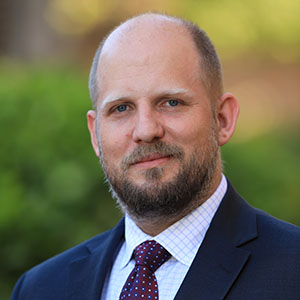
Today's conversation focuses on one of the most urgent and often overlooked challenges facing construction, suicide prevention, and mental health. I am honored to welcome someone who has been leading the national conversation on this issue, Sonya Bohmann, Executive Director of the Construction Industry Alliance for Suicide Prevention or CIASP. Under her leadership, CIASP, has become a critical resource for organizations across the country, helping them understand the scope of this crisis and offering practical tools to help build healthier and more supportive job site cultures. Sonya, thank you so much for being here. Sonya, thank you so much for being on the podcast today.
Sonya: Happy to be here. Thanks for having me.
Kirk: Thank you. I always like to start off just with something fun and interesting, get to know you a little bit better. I have to ask, what was the last song you got stuck in your head?
Sonya: My daughter goes to the University of Pittsburgh. One of the things that they play right before the fourth quarter is Sweet Caroline, but of course they have a whole pit version. Sweet Caroline played my head the whole drive home from Pittsburgh, which is about a four and a half hour drive.
Kirk: I will also say that Sweet Caroline is just an absolute earworm. It is a very sticky song.
Sonya: It is very sticky. Yes.
Kirk: I wanted to talk to you a little bit today about a lot of things. I want to fully understand for those who might not fully understand the scale of the issue of suicide and suicide prevention in the construction industry, and if you could just kick us off with that.
Sonya: I could certainly talk about statistics, and of course I will take every chance to do that because I think that's the thing that is the hook for many people, so if we just start the conversation there. In 2023, and we're always about two years behind from a data standpoint, there were about a thousand fatal worker injuries in construction, but there were 5000 deaths by suicide. That's why this is such an important conversation that we have to have.
Kirk: Say those numbers again. Just let that sink in. Say those again for me.
Sonya: There were a about a thousand fatal worker injuries, and there were 5000 deaths by suicide.
Kirk: Yeah. It's something that definitely, attention must be paid. There's definitely a conversation to be had. What do you think the contributing factors are that lead to it being such a problem in the construction industry?
Sonya: There's lots of things that apply to that. It's really important though to say that there's never one single cause for someone dying by suicide. There's usually a multitude of factors. Sometimes there is an underlying mental health issue. Sometimes there are just stressors that apply to life. In construction, there are things like, there's a lot of chronic pain and physicality to our job. When you have chronic pain and you aren't able to always get the pain relief that you need, you look to other options for that.
There is a very large co-occurrence of substance use in our industry. There is isolation, there's financial pressures, there's that acquired capacity for suicide, where there are cultures in our industry that are often used as lethal means. There's lots of things that apply to construction that add to those risk factors, and those risk factors become then exponential. They pile up on top of each other.
Kirk: This is obviously a problem throughout all of the industry and all corners of it, but tell me a little bit about your story. How did you end up at CIASP. What is your journey here?
Sonya: I come from light construction, remodels, refreshes, facilities maintenance, and I did that for over a decade. I loved my job and was not looking for a new one. I am a lost survivor, though. I lost my sister to suicide 17 years ago. I had been volunteering with the American Foundation for Suicide Prevention and doing some other local.
I live right outside of Philadelphia, Grassroots Suicide Prevention work. I actually saw a webinar right in the middle of Covid, where Cal Beyer was speaking to CFMA Philadelphia. He was talking about the challenge in construction. I started following CIASP and referencing the information they were putting out in presentations that I was making.
Probably two years later, I happened to be on LinkedIn, and the job description for this job showed up in my LinkedIn feed. I read it and I thought, that looks like my dream job, but I was busy that day working as we all are. It was January in the construction industry, and I had resumes to go through.
A coworker walked by and I said, hey, look at this. They were like, that looks like your dream job. I said, I know. What are you going to do about it? Nothing. It just continued throughout the day. Later that evening, I opened up my laptop and was going to do some extra work. The job description sat there and I thought, well, this is definitely my dream job. I'm going to update a resume. I'm going to send in a cover letter and see what happens.
Two and a half years later, here I am. I went through the interview process. It really immediately felt like home. It felt like it's where I'm supposed to be and that I continue to put two things that are really important to me together and hopefully touch some lives in the process.
Kirk: What does that look like from a functional basis? For two and a half years, what is the day-to-day? What is the mission? We know that, but what is the activity of CIASP?
Sonya: I am the only paid employee of CIASP. We are a hundred percent volunteer organization other than myself. I have 15 board members that I will often reference as a unicorn board. For anyone who has ever sat on a nonprofit board, you know that some people carry their weight and some people don't. Some people want to be on that nonprofit board because they want the notoriety of that. That's not what I deal with every day.
I am incredibly lucky, blessed, whatever word you want to use, whatever one fits you best to say that I have such an incredible board. They are all working members of the construction industry. The board is made up of people that are either construction adjacent, meaning they are in an organization that touches construction. They lead an association that is construction. They work for a construction company. They're a researcher in construction, but they all have full-time jobs. They work for CIASP, meaning they do the work. They all sit on a committee. They all contribute. You will often see them on podcasts, webinars, blogs, and on our social media. They all really work very hard at promoting this mission. For us, it is about the mission.
One of our former board members, his name is Greg Sizemore, and you also hear me often attribute this quote to him. Is it about the mission or is it about a monument? Every decision that we make and every piece of material that we put out, every new initiative, gets weighed against that. Is it about moving the mission forward? Meaning are we going to make a difference or is it about creating a monument? Are we doing it to be first? Are we doing it to be spiteful? Are we doing it to gain notoriety? If that's the case, then those things don't happen. If it can create real change, then that's what we focus on. It allows us also not to get caught up in the other things that are happening and stay really focused on mental health and suicide prevention in construction.
Kirk: That resonates with me in a way that I've never heard that before. I was actually speaking to one of the executive team of a different nonprofit in a very different space. They work for vulnerable populations and providing them services. I don't want to get too specific into it, but I was talking to one of the executives who was very much giving me the mission. I said, hey, I want you to answer me a question, just so I can understand, and there's no wrong answer. There's no shame in this. Is the important thing these people getting the wells or is the important thing you giving them to them?
The answer was the wrong one, but that's not the point. There isn't a wrong answer. You need to know your own motivations. This individual really wanted to be providing these services, but the fact that you guys are aware of that concept that, no, we're not building monuments, it's ego free, it's about moving the mission and not the monument, I really like that phrase.
Sonya: The other side of that is that when it becomes a monument, a monument has to be maintained. That's part of what allows us to really focus on the fact that it can't be about a thing or a person, meaning a person as in the ego side of a person, that it has to be about how we can make a difference, how we can change lives, but that we have to do it together. We meaning the entire industry because CIASP is just a small piece of this industry, and so remaining labor agnostic so that we have both labor and merit in the conversation being apolitical, so that no one feels ostracized in the conversation and really just making sure that everything is ahead of a paywall so that that doesn't make someone feel like they can't be part of the conversation, is really what the board focuses on. It allows me then to have that path to follow to execute what their intended plan is.
Kirk: You just spoke about a few of them, obviously, ahead of a paywall is huge, the ostracization. You've also spoken in the past about the stigma of reaching out for health, about reaching out for help for mental health. What does that look like in the real world job site? How do we break that stigma around those things?
Sonya: Yeah. That is such a complex question because there is certainly a belief that when you talk about stigma, it actually creates stigma. There is the, instead of focusing on the stigma about it, how do you make this a conversation that happens like any other conversation? What we have to start getting to is the place that we're talking about mental health and suicide prevention, just like we're talking about falls, struck-bys, or electrocution, because when we started talking about those things, we started making a difference. The numbers have come down exponentially. If we make mental health the same level of a conversation as physical health, then that's how you start doing that.
Kirk: How do the leadership help with that? From your executives down to your foreman, to your foreman buddy, how do we signal to workers, how do we build that environment, that atmosphere of safe to talk?
Sonya: You put it every place that you put safety and every place that you put human resources. It becomes commonplace, and your leadership is messaging about it in their town halls, their safety stand downs, and their all staff meetings, or whatever way that leadership communicates. If they're putting out a newsletter, your HR does it the same way. Even something as simple as in your email signature, if you were someone you care about is in crisis, call 988 or reach out to 988, that starts signaling that.
You make it part of your messaging in your social media. You make the conversation not about those two times a year that everybody is talking about it. It's not just about mental health month, and it's not just about suicide prevention month, but it's woven into the regular conversations that you're having about culture, the regular conversations that you're having about safety, the regular conversations that you're having about employee welfare and wellbeing.
Kirk: What does success look like there? Do you have an example of a company that's doing it really well? What does doing it right look like?
Sonya: Yeah. There are so many companies that are doing it really well, and it really depends on the size of the company. Certainly, we have small companies that are just starting to have the conversation. They're doing something as simple as putting 988 stickers in any place that someone is going to the restroom. Whether it is in the porta-potties on their job sites, whether it is inside the office, just a 988 sticker. It's just that simple. There's not a lot of conversation around it. There's not big long posters, it's just the sticker.
It made a huge difference. People started then commenting about it, and then it starts other conversations. Sometimes it's a company that has started doing once a quarter, they just simply started doing what's called gatekeeper training. They hold QPR training, which is question, persuade, refer. They just put it out there and you can tune in virtually from wherever you are. It's an hour long, or they'll hold a in office lunch and learn with it. It's out there for anyone who wants to become that gatekeeper, the person that recognizes the signs and then refers someone to help.
There are companies that have taken it much further, and they've created mental health champions. There is a company that is headquartered in Texas, a fairly large company that does work around the country. They have created mental health champions in all of their job sites and brought them into their headquarters for a two-day training and talked about everything from recognizing the signs to having the conversation and actually asking someone, hey, are you thinking of suicide because I'm really worried about you, to changing culture to their CEO, getting up and saying, I have a standing therapy appointment and it's made a difference in my life, and if you need to do that too, let's figure out how to make that happen for you, to even larger companies who are now changing their EAP, creating videos, starting to share lived experience stories.
It can happen at every level of this. It doesn't have to be something. Although all of our resources are ahead of that paywall, but it really can be something as simple as you printing out a poster and sticking it up somewhere. You don't have to spend a lot of money at this to investing in big cultural changes because you're moving hundreds of thousands of people as well. There's something for everybody in this conversation.
Kirk: Context clues aside. Can you tell me a little bit more about the mental health champion? What would that role look like, and what is that?
Sonya: Different companies have done it in different ways, and different associations have done it as well. In large associations, there's someone in each chapter. We have seen a couple of them do that. CFMA does that, ABC does it, AGC has a mental health task force. Just giving you the gamut of union versus non-union and in the middle as well. In companies though, they have people that have said, this topic is important to me, and I want to be that person that is trained so that if someone wants to come to me, I know how to have a conversation with them. I know how to look for the signs in someone else, and I know where to refer if someone really needs help.
They then give them a little bit of extra training. Sometimes they have a different colored safety vest. Sometimes it's a sticker on their hard hat. Sometimes it's different colored hard hat so that they are immediately identifiable, so that someone who's in trouble can say, that's someone I can talk to. What I mean in trouble, I mean at risk or struggling in something they shouldn't.
Kirk: If we had someone, big company, small company, anywhere in between union, non-union listening, and they had identified that they may or may not have a problem within their company, not them personally, that there may be actions to be taken. What is that first step, the first small thing, the first action that you can do tomorrow? Is it the sticker? What's the first thing?
Sonya: The first thing that I would do from a company standpoint is that I would go onto our website and take our needs analysis. The reason I say to start there is that it allows you to take inventory of what you have in place, what gaps you have, and then you can figure out what you're already doing and recognize that's a really great first step, but then recognize what you have to do next so that you can shore up the building. If you think about it as building something, we're in construction, that's your foundation, and then put your structure up. What are you missing then? Are you missing windows? Are you missing flooring? What does that look like? How do you then either go back to our website or look at some of the other industry resources to put those pieces in place?
Kirk: CIASP offers a lot of things, and you've just mentioned a lot of them from tons of different resources. Obviously everyone's needs are different, but do you have a template, a guide, or a training that you like the best, that you have found to be the most impactful?
Sonya: I think it's really important that you look at training in different levels. I talked about gatekeeper training a few minutes ago, and I think that's always a really good first start or an introduction. Everybody should take an introduction so that you learn the signs, the risk factors, what you can do, those basics to the conversation. From there, if you're comfortable saying to someone, are you thinking of suicide, then you should learn how to do that. You should be really comfortable with that, so you need practice.
I would take [5:00]. It is construction specific. It takes about an hour. You can do it over lunch. There's lots of trainers around the country. They are happy to walk you through what that looks like. From there, that's when you decide how much I think I can handle as a person. Do I want to do something like a mental health first aid, or do I want to take something like an assist training? That's where you go a little bit further. Then you're trained to be able to take someone who's in crisis and then help them get to that next step to do that warm handoff or even to create a safety plan with somebody.
That training's not for everyone. I would say even that middle training is not for everyone. You have to know that that's something that you're comfortable with. You have to know where your own emotions are in the conversation, and then figure out if that's where you want to connect in.
Kirk: I don't want to step too far away from what you guys do and what you offer. Obviously, helping the at-risk people, finding those people, getting rid of the stigma, these are all really important things. If we were speaking just super hypothetically, theoretically, what are things that we can be changing in the job site that could maybe help us even take one step further back from the edge of not having us get to the point of needing to rescue, but promoting just better workplace environments to begin with within this industry that tends to be high injury, high risk?
Sonya: Yeah. I think building cultures of care is really important. What I mean by building a culture of care is creating a space where the conversation happens, like it does any other safety conversation first and foremost but also where there's community. We used to do so many things as communities before Covid. We've stepped away from that.
We used to have things like softball leagues, pickleball leagues, and book clubs in places where people would get together. They don't necessarily have to be focused around a happy hour or hanging out at a local watering hole, whatever that looks like but reestablishing community, because we know that when people are connected to each other and feel like they're part of something bigger, the cliche is that bigger than the sum of our parts. It really does make a difference when you have a reason to want to stay or people that you know care about you and want you to stay, so doing those things, whether it is looking for or developing peer-to-peer support groups or relationships within a company, extending just conversations that are more than the usual, creating spaces that are safe spaces where if somebody is on a recovery journey, they have a mocktail option or just places again that you feel like you can connect into.
To go back to that original conversation about being singled out or ostracized, if we can start just pulling those pieces apart in our culture, giving people opportunities to come forward and say, I am struggling and not being labeled or ostracized for that, whether it's with substance use or mental health, but just creating cultures where people want to work. That's not about pizza parties and things like that, but it's more about really focusing on what people need.
Kirk: It's interesting talking about these cultures in these communities. We talk a lot about the tripartite because we have labor, we have management, and we of course have the owner of the facility that they're all working on, and trying to build this labor and management relationships and partnerships and building that. Some of our our biggest safety advocates are actually not our labor safety guys or even our internal management safety guys, but actually our owners that say, here at our facility, we are going to be super safe, and if you need to go slower, take longer, and not hit a deadline for safety, that's what the owner is prescribing. Can you talk a little bit about the labor management partnerships of those communities, not just within a company?
Often with construction companies specifically, you don't always have entire control of your job site. It's not your facility. Coming in as labor or coming in as management coming into a third parties facility, how do you build those cultures outward like that?
Sonya: I think it has to do with getting to know your people. Everybody can do that. Whether you have control over a checkbook or you are the person that is in charge, leadership, especially in construction, means the person who is looked to as the leader. Certainly, there's leadership from the top and all of those spaces, but there's subcultures within construction. The person that's leading really does have an opportunity to set the example, to check in on their people, to get their know their people, that there are other things happening in their lives. Starting conversations that establish that you're a safe person to talk to. That can be as simple as having a toolbox talk on a job site about a topic that feels like it's not the usual but isn't necessarily an in-your-face mental health topic. It could be about hydration, it could be about gut health, or it could be about sleep, because all of those things affect mental health.
It could also be something as simple as starting conversations about workplace violence. Any conversation that gets people thinking about this is more than just a one-off or a two-times-a-year conversation. It could be about therapy, it could be about sharing your own experiences. It could be sharing that you go to therapy. Maybe it's sharing an article, but there are so many ways that you could start the conversation and align yourself as an ally than just saying, today we're talking about mental health, suck it up kind of thing.
Kirk: Going back to that stigma that we've talked about a few different times, you're a laborer, you're in any of the trades, and you understand whether it is addiction to the pain pills because of an injury, just mental health, overwhelmed, you're working seven tens for months on end, or whatever, I know from a personal and personal history standpoint that sometimes you're like, yeah, I know that mental health is important, but there's no way out for me. I can't work less, I have bills to pay, and we're a small crew, I can't let my boss down. It isn't always just the stigma, but often the, I'd be happy to talk about it, but there is no relief to be had. What resources is there for the person that just feels penned in like that?
Sonya: Talking about it is actually one of those resources. We recognize that in this industry, sometimes there are unrealistic expectations that are set because we have truncated work periods, because the weather's going to change. There are times when we can work and times that we can't based on all kinds of different things that happen, but acknowledging that and saying, this is going to be stressful, but we're all in this together. This is not just a you, it's a us.
That helps take a little bit of that pressure off, certainly when you realize that you're not doing this by yourself because when we think that we have a problem that we have to carry ourselves, it multiplies. Acknowledging that first and foremost, but also figuring out ways. I know it sounds cliche, but thinking about self-care. Self-care isn't bon bons and bubble baths as much as we would all sometimes like it to be.
Self-care can be something as simple as starting a meditation or a mindfulness practice. That's just a few minutes. It could be something as simple as a grounding process where you take just a couple of seconds to say, I'm going to do some box breathing, it could be reading a book on your lunch break, or it could be instead of going back to your hotel room when you're traveling and partaking in alcohol, going to the gym, taking a walk, or doing a puzzle. Whatever that looks like, but it's whatever fills your cup back up but really not neglecting the importance of it, because it really does matter. As much as we joke about self-care, it's important that we take some time to recharge.
Kirk: When we look at the future and we say, mental health now is not where it was a few years ago, lots of people are taking notice. The 988 campaigns are going, lots of people are having the coins and the stickers, and it's on helmets, on bumper stickers, the conversation has moved to the forefront, and that is very positive. As we look down five years, 10 years down the road, what change do you hope to see in the industry that can lead to permanent change, that 1000 per 5000 number?
Sonya: That's no longer the have-to-do topic, but it's the we-just-do-it topic.
Kirk: Good answer. That's a great answer. It's just something we do, not something that we have to be reminded to do. How can contractors, unions, and safety professionals support CIASP and that mission of getting it to be the conversation we're already having?
Sonya: You can go to our website. It is www.preventconstructionsuicide.com. You can tune into our podcast, which is Above & Below. You can check out one of our web series. It's called Construction Change. We do a webinar. We do them once every two months starting next year, but we put out five this year. There's lots of ways to connect in with us. All of our resources are free, so please use them.
Kirk: Wonderful. We would love to help support those webinars, so please let us know when those are, because we would love to promote those out to have people know when and where they can engage with those.
Sonya: Awesome. Thank you so much.
Kirk: Thank you so much for being on our podcast today. It's been a great conversation. Please let us know how we can help in the future.
Sonya: Great. Thanks for having me.
Kirk: Sonya, thank you so much for joining us today. Your leadership and CIASP's work is making profound difference across the industry. Conversations like this help remind us that safety is about more than hard hats and harnesses. It's about people, their lives, their families, and the culture we create around them.
For our listeners, if you want to learn more about CIASP, access resources, or find out how your organization can get involved, visit www.ciasp.org. As Sonya mentioned, you'll find training tools, sample policies, awareness materials, and guidance designed specifically for construction.
Sonya, thank you again. Thank you to all of you for tuning into Talk the TAUC. Until next time. Keep building strong partnerships, supporting your teams, and putting people at the center of safety.